
AISSEE Class 6 GK PYQ Analysis: Most Frequently Asked Topics
Many students make the same mistake while preparing for the General Knowledge section of the AISSEE Class 6 examination: they try to study everything.
One parent purchases a large current-affairs book. Another asks the child to memorise hundreds of capitals, awards and historical dates. The student studies for hours but still feels unsure because General Knowledge appears to have no clear boundary.
The previous-year papers tell a different story.
Our AISSEE Class 6 GK PYQ Analysis of the six supplied question papers from 2021 to 2026 reveals that the examination repeatedly focuses on a manageable group of topics. These include everyday science, the human body, plants and animals, environmental studies, Indian culture, important places, famous personalities and selected historical events.
In fact, several facts and concepts have appeared more than once—and some questions from the 2025 paper appeared again in very similar form in 2026.
This means that students do not have to memorise an encyclopaedia. They need to identify the recurring areas, understand basic NCERT Environmental Studies concepts and practise enough previous-year questions to recognise familiar patterns.
Analysis note: This article examines 150 GK questions—25 questions from each of the supplied AISSEE Class 6 papers for 2021, 2022, 2023, 2024, 2025 and 2026. Topic categories may overlap, so the frequency bands below should be treated as preparation guidance rather than an official chapter-wise allocation.
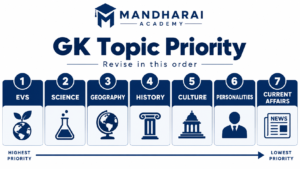
AISSEE Class 6 GK PYQ Analysis: Quick Findings
The six-year analysis produced five major findings:
- NCERT EVS concepts form the foundation of the section.
- Static GK is far more important than random current affairs.
- Plants, animals, health and everyday science appear consistently.
- Indian places, culture, personalities and achievements are high-priority areas.
- Questions and concepts can repeat across different years.
A child who understands school-level EVS and revises a well-organised static-GK notebook is likely to be better prepared than a child who reads current affairs without a clear plan.
The observed priority levels are summarised below.
| Priority | Topic cluster | Pattern observed in the supplied papers |
|---|---|---|
| Very high | Everyday science, health and human body | Present consistently across the six papers |
| Very high | Plants, animals and environment | Questions appeared every year |
| Very high | Indian geography, places and monuments | States, cities, rivers and landmarks recurred regularly |
| High | Indian history, civics and national symbols | Freedom movement, leaders and national identity appeared frequently |
| High | Art, culture, food, dance and literature | Covered through regional culture and famous works |
| High | Personalities, achievements and sports | Scientists, explorers, athletes and award winners recurred |
| Medium | Space, inventions and scientific instruments | Usually a small but regular part of the section |
| Medium | World GK and international organisations | Capitals, organisations and global facts appeared selectively |
| Limited but necessary | Current affairs | Usually fewer questions than static GK and EVS |
How We Conducted the AISSEE Class 6 GK PYQ Analysis
The GK sections of the supplied papers were reviewed year by year. Each question was grouped under a broad topic such as:
- Human body and health
- Everyday science
- Plants and agriculture
- Animals and their behaviour
- Environment and natural resources
- Indian history and freedom movement
- Geography, states, cities and monuments
- Art, dance, books, food and culture
- Famous personalities and achievements
- Sports, awards and defence
- Space and inventions
- International organisations and world GK
- Current affairs
The purpose was not simply to count questions. We also looked for:
- Exact or near-exact repetition
- The same concept presented with different wording
- Topics appearing across several years
- NCERT EVS-style questions
- Areas that students commonly ignore
- Changes in the balance between static GK and current affairs
Students should use this analysis alongside the latest AISSEE Class 6 syllabus and official notifications. Examination information can be checked through the NTA AISSEE portal and the Sainik Schools Society.
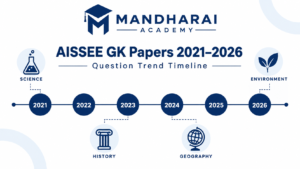
Science Trends in AISSEE Class 6 GK PYQ Analysis
Everyday science is one of the safest high-priority areas for AISSEE GK preparation. The questions generally test familiar situations rather than advanced scientific formulas.
Examples from the six papers include:
- Uses of a speedometer and thermometer
- Freezing and food preservation
- Dissolving sugar in water
- Evaporation and the water cycle
- Gravity
- Sources of energy
- Renewable and non-renewable resources
- The composition of water
- Planetary facts
- Living in space
- Salinity and floating in the Dead Sea
The speedometer appeared in both the 2021 and 2023 papers. Thermometers appeared in 2024 and 2025. Water-related concepts—including evaporation, freshwater, dissolving, salinity and the water cycle—appeared in several years.
This pattern suggests that students should understand the science they encounter in daily life.
Important everyday-science areas
Students should revise:
- States and properties of water
- Evaporation, condensation and the water cycle
- Floating and sinking
- Gravity
- Heat and temperature
- Common measuring instruments
- Renewable and non-renewable energy
- Fuels and petroleum products
- Food storage and preservation
- Basic astronomy and the solar system
Instead of memorising only definitions, children should connect each concept with an example. For instance, they should know not only what evaporation means but also how it is used to obtain salt from seawater.
Human Body, Food and Health
Questions about the body, nutrition, diseases and hygiene were also common.
The papers tested concepts such as:
- Taste buds
- Sweat glands
- The brain and meningitis
- Digestion
- Lungs
- Nutrients that provide energy
- Vitamin deficiencies
- Communicable diseases
- Oral Rehydration Solution
- Bacteria used to make curd
- Mosquitoes and malaria
The 2024 paper included the ingredients used in ORS, while the 2025 and 2026 papers referred to Ronald Ross and the connection between mosquitoes and malaria. Other papers tested Vitamin C, Vitamin D, digestion and body organs.
Students should therefore revise the human body at a Class 5 level, especially:
- Digestive and respiratory systems
- Sense organs
- Teeth and tongue
- Vitamins and deficiency diseases
- Infectious diseases
- Healthy food
- First aid and hydration
- Germs and useful microorganisms
A useful preparation technique is to create a three-column table containing the disease, its cause and its prevention. The same method works for vitamins, food sources and deficiency diseases.
EVS Trends in AISSEE Class 6 GK PYQ Analysis
The strongest overall message from the papers is the influence of Environmental Studies. Many questions resemble concepts and examples found in primary-level NCERT EVS lessons.
These are not always labelled as “science” questions. They may be asked through a story, observation or familiar activity.
Recurring EVS areas include:
- How roots absorb water
- Seed parts and seed dispersal
- Earthworms and soil
- Water conservation
- Rainwater harvesting
- Food preservation
- Natural resources
- Fossil fuels
- Drought
- Farming and poultry
- Forest communities
- Animal senses and warning calls
Earthworms being beneficial to soil appeared in both 2024 and 2026. Food preservation appeared in different forms in 2021, 2024 and 2026. Salt production from seawater was tested in 2025 and repeated in 2026.
These examples show why students preparing for AISSEE Class 6 GK should not skip their Class 4 and Class 5 EVS books.
Plants and agriculture
Important subtopics include:
- Parts of a plant
- Functions of roots
- Seed structure
- Germination
- Seed dispersal
- Crops and farming
- Soil fertility
- Natural methods of storing grains
- Useful and harmful organisms
The papers included seed coats, seed leaves, roots, neem leaves used for protecting stored seeds and the role of earthworms in maintaining soil quality.
Animals and their behaviour
Animal questions are rarely limited to identifying a species. Students may be asked how animals communicate, sense danger, reproduce or survive in a particular habitat.
Examples from the supplied papers involved:
- Ants recognising one another through smell
- Langurs giving warning calls
- Birds having strong eyesight
- Bees communicating through dance
- Camels surviving in dry conditions
- Male seahorses carrying young
- Tadpoles developing into frogs
- Kangaroo young being called joeys
Students should learn animals through characteristics and behaviour rather than memorising names alone.
Indian Geography, Cities and Monuments
Another highly dependable topic is Indian geography. Questions connect states and cities with rivers, monuments, festivals, food, dress and natural attractions.
Examples included:
- Nanda Devi and the Valley of Flowers in Uttarakhand
- Kolkata on the Hooghly River
- Charminar and Golconda Fort in Hyderabad
- Meenakshi Temple in Madurai
- Janakpur and Ayodhya in traditional narratives
- Regional foods such as rasgulla and yakhni
- State-specific dances, textiles and festivals
Golconda Fort was linked with Hyderabad in both the 2025 and 2026 papers. The 2026 paper also tested state-based handicrafts and textiles, including Madhubani painting, Pochampally weaving and Assamese silk.
Students should prepare geography through associations:
| Place | Association to revise |
|---|---|
| Hyderabad | Charminar and Golconda Fort |
| Uttarakhand | Nanda Devi and Valley of Flowers |
| Madurai | Meenakshi Temple |
| Kolkata | Hooghly River |
| Bihar | Madhubani painting |
| Assam | Bihu and Assamese silk |
| Telangana | Pochampally weaving |
| Rajasthan | Traditional rainwater-harvesting methods |
A map-based revision notebook can make these facts easier to remember. The child can mark a state and add its capital, one monument, one dance, one food and one geographical feature.
History, Civics and National Identity
The history questions are usually built around major events and well-known figures rather than detailed chronological analysis.
The papers included:
- The Dandi March
- India’s independence and early national leaders
- The formation of Bangladesh
- Gautama Buddha’s enlightenment
- Emperor Ashoka
- Shah Jahan and the Taj Mahal
- The Ramayana and Mahabharata
- The Prime Minister’s appointment
- The national flag
- The National Emblem
- The Ashoka Chakra
The Dandi March and the year 1930 appeared in both 2025 and 2026. National symbols also appeared regularly through questions on the Sarnath Lion Capital, the white band of the national flag and the 24 spokes of the Ashoka Chakra.
Students should particularly revise:
- Important freedom-movement events
- National symbols
- Presidents and Prime Ministers
- The Constitution at a basic level
- Major rulers and monuments
- Important religious and cultural locations
- Basic rights, duties and social laws
The 2026 paper also included questions connected with the Forest Rights Act and legal marriage ages. This suggests that basic civic awareness can be tested alongside history.
Culture, Literature, Dance and Regional Traditions
Indian culture is a broad but highly productive preparation area.
Across the papers, students encountered:
- Kuchipudi
- Bihu
- Singhi Chham
- Kalbeliya traditions
- Madhubani painting
- Musical instruments such as tabla
- Regional clothing and embroidery
- Traditional foods
- Books and authors
- Religious texts and epics
Books and authors included R.K. Narayan, Rabindranath Tagore, Salman Rushdie, Isaac Asimov and texts such as the Ramayana and Zend Avesta.
Preparation becomes easier when culture is organised state-wise rather than studied as disconnected facts. Create one page for each major state and include:
- Capital
- Dance
- Festival
- Painting or craft
- Traditional food
- Monument
- Important personality
Famous Personalities, Sports and Achievements
The papers frequently asked students to match a well-known person with an achievement, profession, sport or field.
Examples included:
- Homi J. Bhabha and Indian nuclear science
- Sam Manekshaw and the armed forces
- Neil Armstrong and the Moon
- Viswanathan Anand and chess
- Karnam Malleswari and weightlifting
- Bachendri Pal and Mount Everest
- Vijaya Lakshmi Pandit and the United Nations
- Ronald Ross and malaria research
- Dr Rajendra Prasad and the Indian presidency
Two especially important repetitions occurred in 2025 and 2026:
- Karnam Malleswari — Weightlifting
- Bachendri Pal — First Indian woman to climb Mount Everest
The papers also included football trophies, boxing terms, skateboarding, the Asian Games and civilian awards.
A child should maintain a “Who is Who?” notebook using four columns:
| Person | Field | Major achievement | Memory clue |
|---|---|---|---|
| Karnam Malleswari | Weightlifting | Olympic medallist | Strength |
| Bachendri Pal | Mountaineering | First Indian woman on Everest | Mountain |
| Viswanathan Anand | Chess | World chess champion | Chessboard |
| Homi J. Bhabha | Science | Nuclear programme | Atomic research |
| Sam Manekshaw | Defence | Field Marshal | Indian Army |
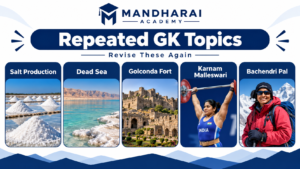
Repeated Questions Found in AISSEE Class 6 GK PYQ Analysis
The clearest repetition occurred between the 2025 and 2026 papers. The same facts—or almost identical concepts—appeared in both years.
| Repeated fact or concept | Years observed |
|---|---|
| Correct sequence for producing salt from seawater | 2025 and 2026 |
| High salinity and floating in the Dead Sea | 2025 and 2026 |
| Karnam Malleswari’s sport | 2025 and 2026 |
| Bachendri Pal’s achievement | 2025 and 2026 |
| Golconda Fort’s location | 2025 and 2026 |
| Ronald Ross and malaria | 2025 and 2026 |
| Dandi March took place in 1930 | 2025 and 2026 |
| Abu Dhabi is the capital of the UAE | 2025 and 2026 |
| Function of a speedometer | 2021 and 2023 |
| Earthworms improve soil | 2024 and 2026 |
| Food-preservation concepts | 2021, 2024 and 2026 |
This does not mean students should expect the next paper to copy old questions. It means that AISSEE Previous Year Question Papers are not merely practice tests. They are a valuable source of revision facts and recurring concepts.
Every question should be reviewed in three stages:
- Identify the correct answer.
- Understand the concept behind the answer.
- Learn two or three connected facts.
For example, after answering a question about Golconda Fort, the student can also revise Charminar, Hyderabad, Telangana and Pochampally weaving. One question then becomes a complete revision cluster.
Is Current Affairs the Most Important Part of AISSEE GK?
No. Current affairs are useful, but the supplied papers do not support spending most of the study time on daily news.
The 2024 paper, for example, included a question connected with India’s performance at the 2023 Asian Games. However, most questions across the six years were based on static facts, EVS concepts, science, geography, culture and famous personalities.
A balanced preparation split would be:
- 40%: EVS, plants, animals and everyday science
- 25%: Indian geography, history and civics
- 20%: Culture, personalities, sports and awards
- 10%: World GK, space and organisations
- 5%: Recent current affairs
These percentages are a practical study recommendation, not an official exam weightage.
For current affairs, students should focus on the six to eight months before the examination and prioritise:
- Major Indian sporting achievements
- National awards
- Important appointments
- Space missions
- Defence achievements
- Major national events
- Child-friendly science and environment news
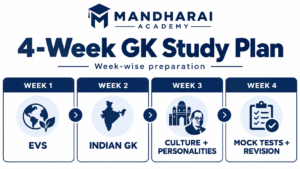
A Four-Week GK Preparation Plan
Week 1: EVS and everyday science
Cover:
- Water and its properties
- Food and nutrition
- Human body
- Diseases and hygiene
- Plants and seeds
- Animals and habitats
- Soil and natural resources
Complete at least 25 topic-based questions each day.
Week 2: India-focused static GK
Cover:
- States and capitals
- Rivers and mountains
- Monuments
- National symbols
- Freedom movement
- Presidents and Prime Ministers
- Basic civics
Use maps, flash cards and short oral quizzes.
Week 3: Culture and personalities
Cover:
- Dances and festivals
- Paintings and handicrafts
- Books and authors
- Scientists
- Sportspersons
- Explorers
- Awards and defence personalities
Revise facts through matching exercises.
Week 4: PYQs and mixed mock tests
During the final week:
- Solve the 2021–2026 questions again.
- Mark every incorrect or guessed answer.
- Create a “last revision” notebook.
- Attempt timed mixed-GK tests.
- Revise repeated questions daily.
- Discuss confusing options with a teacher.
An AISSEE online test series can help students practise mixed questions under time limits and identify weak topics before the examination.
AISSEE Class 6 GK PYQ Analysis: Smart Preparation Tips
1. Start with school-level EVS
Complete Class 4 and Class 5 EVS revision before purchasing several advanced GK books. The PYQs show that basic concepts have considerable value.
2. Learn connected facts
Do not study facts individually. Connect a place with its state, monument, dance, food and important personality.
3. Keep an error notebook
After every mock test, record:
- The question or topic
- Your incorrect answer
- The correct fact
- Why you made the mistake
- One related fact
4. Revise through active recall
Close the book and answer aloud. Flash cards, rapid-fire questions and blank maps are more effective than repeatedly reading the same page.
5. Practise options carefully
Some AISSEE questions contain familiar facts but confusing alternatives. Students should learn to eliminate impossible choices before selecting an answer.
6. Use short daily sessions
A practical daily routine is:
- 15 minutes of static GK
- 15 minutes of EVS revision
- 10 minutes of current affairs
- 10 minutes of PYQ practice
Consistency matters more than studying for several hours once a week.
A Relatable Preparation Scenario
Imagine two students preparing for AISSEE 2027.
The first student reads random GK facts every day. One day it is world currencies; the next day it is ancient kings; after that, it is international news. The student works hard but has no revision system.
The second student begins with PYQs. She notices repeated questions about salt, soil, animals, monuments, athletes and the freedom movement. She revises the related EVS chapters, creates state-wise culture cards and keeps a notebook of mistakes. Every Sunday, she completes a timed mixed test.
After a month, the second student may not have read as many pages, but she is more likely to recognise the type of knowledge the examination rewards.
That is the real value of PYQ analysis: it converts a limitless subject into a structured preparation plan.
Conclusion: Prepare According to the Evidence
The AISSEE Class 6 GK PYQ Analysis shows that General Knowledge is not as unpredictable as many students assume.
The most important preparation areas are:
- NCERT-based EVS
- Everyday science
- Human body and health
- Plants, animals and environment
- Indian states, cities and monuments
- History and national symbols
- Culture, books and regional traditions
- Famous personalities and achievements
- Selected sports, world GK and current affairs
Most importantly, previous-year questions must be revised more than once. Several facts were repeated across the supplied 2021–2026 papers, and many others returned through closely related concepts.
Mandharai Academy’s AISSEE Class 6 Coaching combines structured lessons, PYQ-based practice, mock tests, doubt clearing and personal guidance. For AISSEE 2027 exam coaching and training, contact us today:
- Call or WhatsApp: +91 9442455489
- Email: mandharaiacademy@gmail.com
- Instagram: Mandharai Academy
- Facebook: Follow Mandharai Academy
Prepare selectively, revise repeatedly and let the previous-year papers guide your next step.